
What is a Pantry Moth?
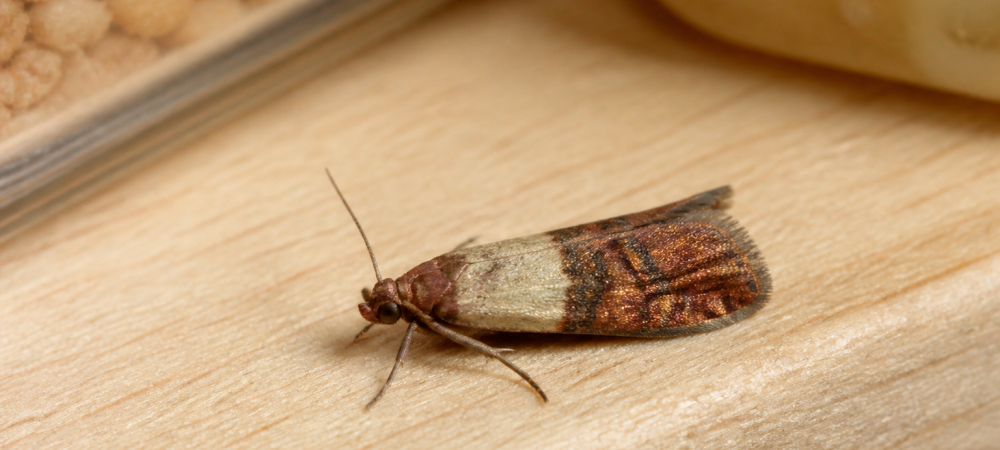
A pantry moth is a small moth whose larvae feed on stored dry food such as flour, cereal, nuts, dried fruit, and pet food. The species behind nearly every household case is the Indian meal moth, identified by wings that are pale tan near the body and reddish copper across the outer half. Pantry moths get into a home inside food that was already infested when it was purchased, and the larvae cause all of the damage.
What Does a Pantry Moth Look Like?
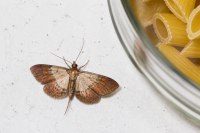
An adult pantry moth is about 5/8 of an inch long with a wingspan near 3/4 of an inch, and the wings are two-toned. The half closest to the body is pale gray or tan, and the outer half is a distinct reddish copper or bronze. That two-color split is the fastest way to tell it apart from a clothes moth or a moth that wandered in from outside. At rest, it folds its wings over its body in a narrow tube shape.
The larvae look nothing like the adult. They are cream or off-white caterpillars, roughly half an inch long when mature, with a darker brown head. Depending on what they have been eating, they can pick up a faint pink or greenish cast.
You are more likely to find the larvae than the eggs. The eggs are grayish white and small enough that they are effectively invisible on a kitchen shelf.
Where Do Pantry Moths Come From?
Pantry moths almost always arrive inside food you brought home. Eggs or larvae are already present in a package when it leaves the store, and the infestation starts in your cabinet rather than moving in through a door or window.
Common foods they're found in:
- Bagged flour, cornmeal, rice, and cereal
- Nuts, dried fruit, and bulk bin items
- Birdseed and dry pet food, often stored in a garage
- Spices, chocolate, and candy
- Whole grain and health food products
Birdseed and pet food deserve particular attention. Both are frequently stored in an open garage or utility room, both are bought in large bags, and both sit undisturbed for months. A population can build up there and then move into the kitchen.
What Do Pantry Moths Eat?
The larvae eat nearly any dry plant-based food, and adult moths do not feed on stored products at all. Grain and grain products are the classic target, but the list is wide: pasta, oats, seeds, powdered milk, dried peppers, tea, and even fish food.
One detail matters more than most people realize. Pantry moth larvae can chew through thin plastic film and lightweight cardboard. A sealed, unopened box is not automatically safe. If you find pin-sized holes in packaging stored next to an infested item, treat that package as suspect.
Are Pantry Moths Harmful?
Pantry moths are not known to bite, sting, or spread disease to people or pets. The harm is contamination and food loss rather than a health threat.
That said, infested food should be thrown out. Larvae leave behind webbing, shed skins, and waste mixed into the product, and cast skins from stored food pests can trigger allergy symptoms in sensitive people. The practical rule is simple: if a package shows webbing, clumping, or live larvae, discard it.
How Do You Get Rid of Pantry Moths?
Getting rid of pantry moths comes down to finding and removing the infested source, because no amount of cleaning or trapping will stop the cycle while the food that started it is still on the shelf.
1. Empty the cabinet completely. Every item comes out, including unopened packages and items on shelves above and below the obvious problem area.
2. Inspect item by item. Check for webbing, clumping, larvae, and holes in packaging. When a package is questionable, discard it.
3. Get the infested food out of the house. Bag it, seal it, and put it in an outdoor trash container. Leaving it in a kitchen trash can gives larvae a chance to crawl back out.
4. Vacuum before you wipe. Vacuum shelf corners, cracks, shelf brackets, and the edges under shelving where cocoons hide, then empty the vacuum outside. Follow with soap and warm water. Skip the shelf liner if you have one and larvae were hiding underneath it.
5. Freeze anything you want to save. Dry goods with no visible damage can be sealed in an airtight container and frozen for about a week to kill any eggs or larvae present.
Insecticides are generally not recommended in food storage areas, and mothballs should never be used near food or food preparation surfaces. Sanitation and source removal do the real work here.
How Do You Keep Pantry Moths From Coming Back?
Prevention is mostly about storage and purchase habits, and it works because it removes the food supply an incoming population needs.
- Transfer dry goods into glass, metal, or hard plastic containers with tight-fitting lids. Thin bags and original cardboard are not barriers.
- Buy susceptible items in quantities you will actually use within a few months.
- Inspect new packages before they go in the cabinet, especially bulk items.
- Freeze high-risk goods for several days before long-term storage.
- Store birdseed and pet food in sealed containers, away from the kitchen when possible.
- Clean up spilled flour, crumbs, and grain in shelf cracks, which is enough to sustain a small population on its own.
- Rotate stock so nothing sits untouched at the back of a shelf for a year.
If moths reappear four to six weeks after a thorough cleanout, a second source is still in the house. Check adjoining cabinets, the garage, and anywhere pet food or birdseed is kept.
Key Takeaways
- A pantry moth is a stored food pest that often arrive in food you purchase rather than entering from outside.
- The larvae cause all of the damage. Adult moths do not feed on stored food.
- Larvae can chew into thin plastic and cardboard, so unopened packages are not automatically safe.
- Webbing in a food package is usually the first sign, and it appears before you notice the moths.
- They are not known to transmit disease, but contaminated food should be discarded.
- Removing the infested source is the only thing that ends an infestation. Traps monitor, they do not eliminate.
- Airtight containers and smaller purchase quantities prevent most repeat problems.
Still Finding Moths After You Cleaned the Pantry?
If you have cleared out the cabinets and moths keep showing up, American Termapest, Inc. can inspect the home, identify the pest, and help locate where the population is breeding. Start with a free inspection!