Stinging insects nest fast, and in places you least expect. Our exterminators identify the species, locate every nest, and remove them safely so you are not the one taking the risk.
Stinging Insect Control in South Carolina
Stinging insects have a way of taking over your yard right when you want to enjoy it most. Whether it is a wasp nest tucked under your eaves or carpenter bees drilling into your deck, the last thing you want is to feel like you have to work around them. Our team has spent 71 years helping homeowners in the Upstate take back their outdoor spaces with bee control and wasp extermination that actually lasts.
Here is what our service covers:
- Wasps, including paper wasps commonly found nesting under soffits and overhangs
- Yellowjackets, which build ground nests and become most aggressive in late summer and fall
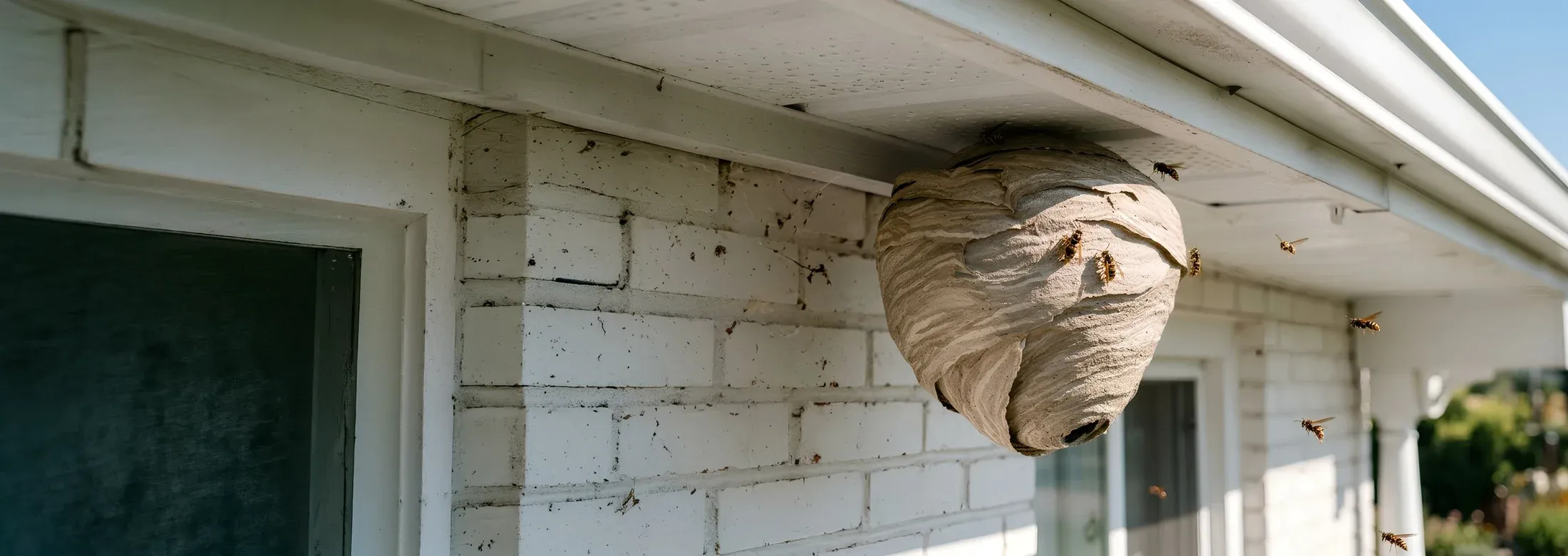
- Hornets, including bald-faced hornets known for large aerial nests
- Carpenter bees, with targeted treatment to protect wood structures from ongoing damage
- Honey Bees, which we refer to local beekeepers for safe and responsible relocation
We're a locally owned company, not a national chain. When you call us, you get a technician who knows the Upstate and treats your property like it deserves real attention. If stinging insects have been keeping you off your porch or out of your garden, we are ready to help with honest service and long-term results you can count on.
Learn More About Our Stinging Insect Services:
When Stinging Insects Take Over Your Property, Here Is What to Do Next
Stinging insects nest in places you walk past every day, and most people do not realize how close they are until someone gets stung. Activity in our area peaks through summer and into early fall, and proper treatment means knowing exactly which species you are dealing with, where they are nesting, and how to remove them without putting you or your family at risk.
Here is how the process works when you call our team:
- We inspect the exterior of your property to locate all active nests and identify the species present.
- We assess nest placement, access points, and activity levels to determine the right treatment approach for each site.
- We treat nests directly using appropriate materials for the species and location, whether that means dusts, aerosols, or residual applications.
- We remove accessible nests after treatment to reduce the chance of secondary pests or future colony reuse.
- We walk you through what was found, what was treated, and what to watch for as the season continues.
When stinging insect activity is at its worst in late summer and early fall, you want someone who shows up, knows the region, and treats the problem thoroughly. We stand behind the work and give you a straight answer about what was treated and why.
Environmentally Responsible Wasp Control
At American Termapest, Inc., we use EPA-approved treatments that effectively target wasps and hornets while minimizing impact on beneficial insects. Our technicians carefully apply products to nesting sites and surrounding areas, ensuring your outdoor spaces remain safe for family activities.

Why You Should Not Put Off a Stinging Insect Problem
A single yellow jacket or paper wasp nest can house hundreds of insects by late summer. Hornets are especially aggressive when their nest is disturbed, even accidentally. For anyone with an allergy to insect stings, that kind of exposure can lead to a serious reaction. According to the American College of Allergy, Asthma, and Immunology, stinging insects send more than 500,000 people to emergency rooms across the country every year. That number is not a coincidence. It reflects how common these encounters are when nests go ignored.
Beyond the health risk, delaying treatment causes other problems. Carpenter bees bore into wood trim, fascia boards, decks, and siding to lay their eggs. Over time, that damage adds up. Yellow jackets sometimes nest inside wall voids or under eaves, and a colony that establishes itself inside a structure can be a much harder problem to resolve later in the season.
Frequently Asked Questions
Are your treatments safe for kids and pets?
Yes, of course! Your safety is our top priority. We use products and application methods that are designed to be effective and produce results, while also being safe for humans, pets, and the environment when used as directed. Our technicians are trained to apply treatments with care and responsibility.
What should I do if I find a nest near my home?
Stay away from it and don’t try to spray or knock it down. Call a professional—some nests house thousands of aggressive insects.
Can you treat for stinging insects in walls or attics?
Yes. We have tools and techniques to safely locate and treat hidden nests, including those in soffits, vents, or behind siding.
Do carpenter bees sting?
Yes, but only female carpenter bees can sting, and they generally do so only if they feel threatened or provoked. Either way, we never recommend attempting to get rid of carpenter bees yourself; it's essential to have a professional address the problem as soon as possible.
How can I tell if I have a wasp or hornet problem?
Signs include frequent insect activity, visible nests under eaves, decks, or trees, and buzzing sounds from walls or attics. We can identify the species and the level of infestation.
Is it dangerous to try and remove a nest myself?
Yes! Many stinging insects are highly aggressive when their nest is disturbed. DIY removal can lead to serious injury—especially if you’re allergic or the nest is hidden.
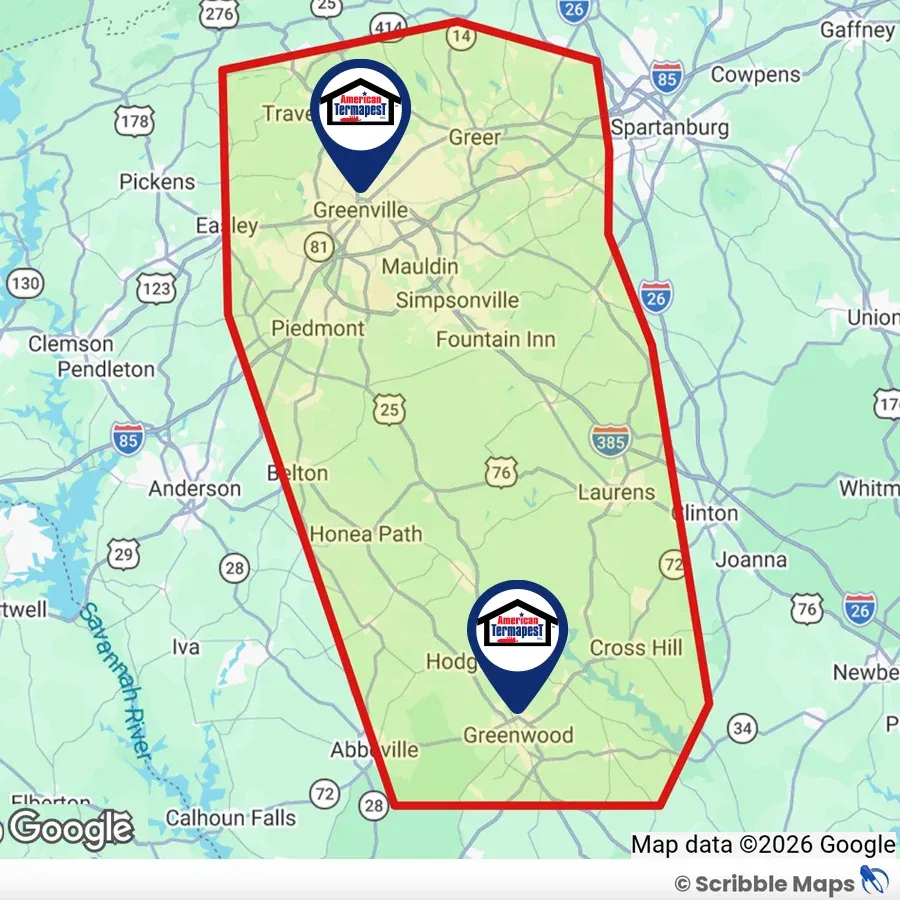
Stinging Insect Control Service Area
For 71 years, American Termapest, Inc. has delivered trusted stinging insect control, and the cities, towns, and neighborhoods listed below confirm that carpenter bee, wasp, yellowjacket, and hornet treatments are available near you.