
Why Are Kudzu Bugs Swarming My House Siding?
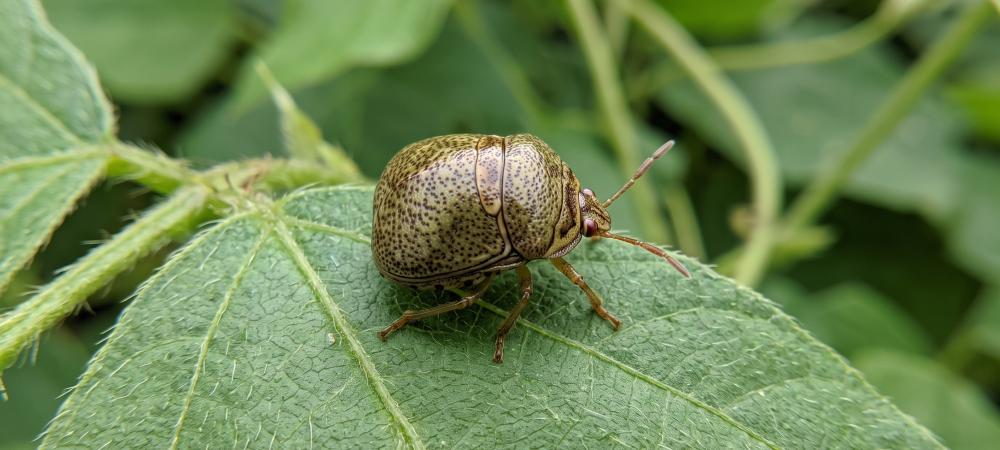
Kudzu bugs swarm house siding in the fall because they are abandoning dying kudzu and soybean plants to find somewhere to spend the winter, and a sun-warmed, light-colored wall is exactly the kind of place they are looking for. The flight is triggered by shortening days, declining temperatures, and host plants going dormant, and it typically runs from mid-October into late November or early December.
The bugs are not feeding on your house and they are not damaging it. They are looking for a crack to get into before it gets cold.
What Is a Kudzu Bug?
A kudzu bug is a small, round, olive-green to light brown insect about an eighth to a quarter inch long, related to stink bugs but in its own family. It is also called the bean plataspid, lablab bug, or globular stink bug, and its scientific name is Megacopta cribraria.
The rounded, turtle-like body shape is the easiest way to recognize one. A hard shield covers the wings and abdomen, and the back end of that shield is cut off square rather than rounded or pointed, which separates kudzu bugs from other shield-shaped true bugs.
Kudzu bugs are not native. They were first found in the United States in northeast Georgia in 2009, spread quickly through the Southeast, and now occur across much of the region. They feed on legumes, primarily kudzu and soybeans, which is where the population builds through the summer.
Why Do Kudzu Bugs Show Up in the Fall?
Kudzu bugs move to structures in the fall because their host plants are shutting down and the bugs need a protected place to overwinter as adults. Shortening day length, changes in the kudzu itself, and dropping temperatures together trigger a mass flight away from the plants.
That flight has been consistent in its timing. It generally begins in mid-October and continues into late November or early December, which makes this an annual event you can plan for rather than a surprise.
There is a second, usually milder nuisance period in early spring, around March, when overwintering adults come back out and move toward host plants. People often mistake that spring emergence for a new infestation when it is the same population leaving.
Why Is My House Getting Hit and Not My Neighbor's?
Kudzu bugs are strongly drawn to light-colored surfaces, especially white, and the effect is stronger when pale walls sit next to darker trim. White and tan exteriors also hold heat from the afternoon sun, which is likely why they are favored as overwintering shelter.
Proximity to host plants is the other factor. Properties near kudzu patches, wisteria, or soybean fields carry the heaviest pressure, because that is where the summer population grew before it dispersed.
Sun exposure narrows it further. The walls that get hit hardest are usually the ones facing the afternoon sun, which is why one side of a house can be covered while another side has almost nothing on it.
Do Kudzu Bugs Damage Houses or Bite People?
Kudzu bugs do not damage structures and do not bite. They have piercing mouthparts built for plant sap, not for skin, and they cannot chew wood, fabric, or stored food.
The actual problems are odor and staining. Kudzu bugs release a defensive secretion when disturbed or crushed that carries a mildly unpleasant smell and leaves stains on siding, painted surfaces, upholstery, and clothing. Those stains can be difficult to remove, which is why the response to a swarm matters more than the swarm itself. Avoid handling them with bare hands.
Kudzu bugs also do not reproduce indoors and do not feed on anything inside a house. Any bug that gets inside is there to overwinter, and it will not multiply.
Key Takeaways
- Kudzu bugs swarm siding in fall because they are leaving dying host plants to find overwintering shelter.
- The fall flight generally runs from mid-October into late November or early December, with a smaller spring emergence around March.
- Light-colored siding, especially white next to darker trim, and sun-warmed walls attract them most.
- Properties near kudzu, wisteria, or soybean fields see the heaviest pressure.
- Kudzu bugs do not bite, do not damage structures, and do not reproduce indoors.
- Crushing them releases a staining, foul-smelling secretion. Vacuum instead and empty it outside.
- Exterior treatment works best applied before the flight starts, not during it.
- Sealing gaps around windows, soffits, utility penetrations, and siding edges is what produces lasting results.
- Regional kudzu bug numbers have fallen since the peak years, driven by a parasitoid wasp and a naturally occurring fungus.
Getting Swarmed Every Fall?
Kudzu bugs return to the same structures year after year, which means the houses that got hit last October are the likely candidates this October. The two things that change that are sealing the gaps they are trying to reach and timing any exterior treatment ahead of the flight rather than during it. American Termapest, Inc. can inspect the exterior, identify where they are getting in, and build a pest control plan around the season instead of reacting to it. Request a free quote to get ahead of this fall.