

Our process includes two full treatments designed to address active infestations at the source. By treating all affected areas carefully, we deliver consistent and reliable results.
Bed Bug Treatment in Greer, SC
If you have been traveling for work, staying in hotels, or have kids coming home from college, bed bugs may be the last thing on your mind. That does not mean they are not there. Bed bugs are expert hitchhikers. They latch onto luggage, clothing, and secondhand furniture, and they can make their way into any home without you ever knowing it.
The good news is that a professional inspection can tell you exactly where you stand. If there is an issue, catching it early makes a real difference. And if there is not, you will know that too. Either way, you are not left guessing.
Here is why homeowners in Greer choose American Termapest for bed bug exterminator services:
- Discreet, professional inspections with no pressure
- A biological treatment that gets to work on contact and keeps eliminating bed bugs after application
- Fast-acting results that target the infestation the first time
- Long-term protection, not just a one-time fix
- Locally owned, not a national chain
- 71 years serving the Greer community
You do not have to figure this out on your own. A quick inspection is the right first step, and American Termapest will walk you through everything from there.
Additional Services in Greer
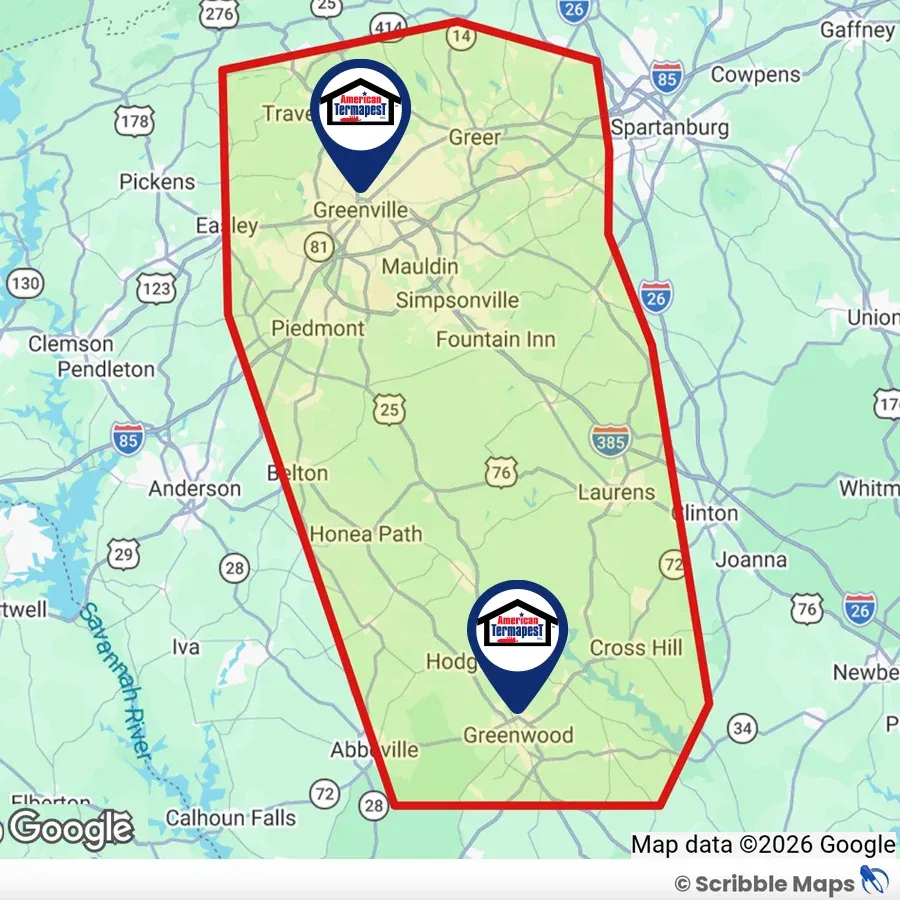
A Different Kind of Bed Bug Treatment for Greer
If you have been dealing with bed bugs and chemical treatments have not done the job, there is a reason that matters. Many bed bug populations in the region have developed resistance to common chemical pesticides. American Termapest offers Bed Bug in Greer using a biopesticide approach built around a naturally occurring fungus, Beauveria bassiana, that bed bugs cannot resist the way they can a pyrethroid spray.
Here is how the treatment process works:
- A licensed pest management professional inspects your home to identify where bed bugs are active and where they travel, including bed frames, baseboards, box spring seams, furniture legs, and wall-floor junctions.
- The treatment is applied as a thin, low-volume barrier along those surfaces using a specialized applicator, not a broad room spray.
- When a bed bug crosses a treated surface, fungal spores attach to its outer shell and begin to work their way into the insect's body over the following 3 to 10 days.
- Infected bugs return to their harborage areas before dying, spreading spores to other bugs through direct contact. This means the treatment reaches populations deep in cracks and crevices that never touched a treated surface.
- A single application provides residual protection for up to 3 months, significantly longer than most conventional liquid treatments.
Why American Termapest Is the Right Call for Bed Bug Treatment
American Termapest is a locally owned company, not a national franchise, and that matters when you need someone accountable to you by name. This biological approach works in homes, multi-family properties, hotels, healthcare facilities, and student housing, anywhere chemical treatments raise concerns or have already fallen short. The treatment is EPA-registered, applied only by licensed professionals, and carries a low toxicity profile for people and pets. When the standard options have not worked, this is a treatment that takes a fundamentally different approach to the problem.
71 Years of Solving the Toughest Pest Problems
With 71 years of fieldwork behind us, we know how to identify a problem fast and get it right the first time, whether it's a seasonal surge or something that's been building for years.
American Termapest brings decades of proven expertise to every job, so you get reliable service backed by a track record that speaks for itself.
Biopesticide Bed Bug Treatment in Greer
Bed bugs are one of the harder pests to get rid of, and that is mostly because standard chemical treatments have become less effective over time. Many bed bug populations in the U.S. have developed resistance to pyrethroids, which are among the most commonly used chemical insecticides for bed bug control. Our fungal bed bug treatment takes a completely different approach, and that difference matters.
Our treatment uses a naturally occurring fungus suspended in oil, applied as a thin barrier along the surfaces bed bugs are known to travel. When a bed bug crosses a treated surface, spores attach to its outer shell. Those spores work their way into the insect's body over the following days and kill it. The kill window is 3 to 10 days, and that timing is actually part of what makes this treatment effective.
Why the Slow Kill Works in Your Favor
Because the bug doesn't die immediately, it carries spores back to wherever it hides and spreads them to other bugs through direct contact. That means the treatment reaches bugs that never crossed the treated surface at all, including those hiding deep in cracks, seams, and behind walls. A single application provides residual protection for up to three months.
This approach is registered with the EPA as a biopesticide and must be applied by a licensed pest management professional. It is not available as a DIY product, and it cannot be applied with standard sprayers. Our treatment is well-suited for a wide range of settings in South Carolina, including:
- Residential homes dealing with recurring or resistant infestations
- Multi-family and rental properties where chemical use may be restricted
- Hotels and short-term rental units
- Healthcare facilities, senior living communities, and schools
- Any environment where low-toxicity treatment is a priority
According to the CDC, bed bugs have resurged significantly over the past two decades, affecting homes, hotels, and healthcare facilities across the country, and resistance to conventional treatments is a documented part of why they are difficult to eliminate. Our treatment sidesteps that resistance problem entirely. Bed bugs have shown no ability to develop resistance to fungal infection the way they have with chemical pesticides.
A Treatment Built for Hard-to-Treat Infestations
American Termapest applies this treatment to the specific zones where bed bugs travel, including bed frames, box spring seams, baseboards, furniture legs, and wall-floor junctions. The low-volume application keeps disruption in your home to a minimum while still targeting the areas that matter most.
If you have questions about whether this treatment is the right fit for your situation, there is a lot more worth knowing about how it compares to other options.
Warning Signs of a Bed Bug Infestation You Should Not Ignore
Bed bugs are expert hiders, and most people do not realize they have an infestation until the signs become impossible to miss. Catching the problem early makes a real difference in how quickly and effectively it can be addressed.
Common bed bug warning signs reported by homeowners across South Carolina:
- Small, rust-colored stains or dark spots on mattresses, box springs, or bedding
- Tiny shed exoskeletons or eggshells in mattress seams and furniture crevices
- A sweet, musty odor near sleeping areas or upholstered furniture
- Clusters of itchy, red welts on exposed skin after sleeping
- Live bugs in the folds of mattresses, behind headboards, or along baseboards
- White, poppy seed-sized eggs tucked into fabric seams or wall cracks
These signs often appear gradually, which is why so many infestations go undetected for weeks. If any of these indicators sound familiar, a professional inspection from American Termapest can confirm what you are dealing with and reveal the full scope of the problem in your Greer home.
Understanding the extent of an infestation is the critical first step toward reclaiming a comfortable, restful living space.