
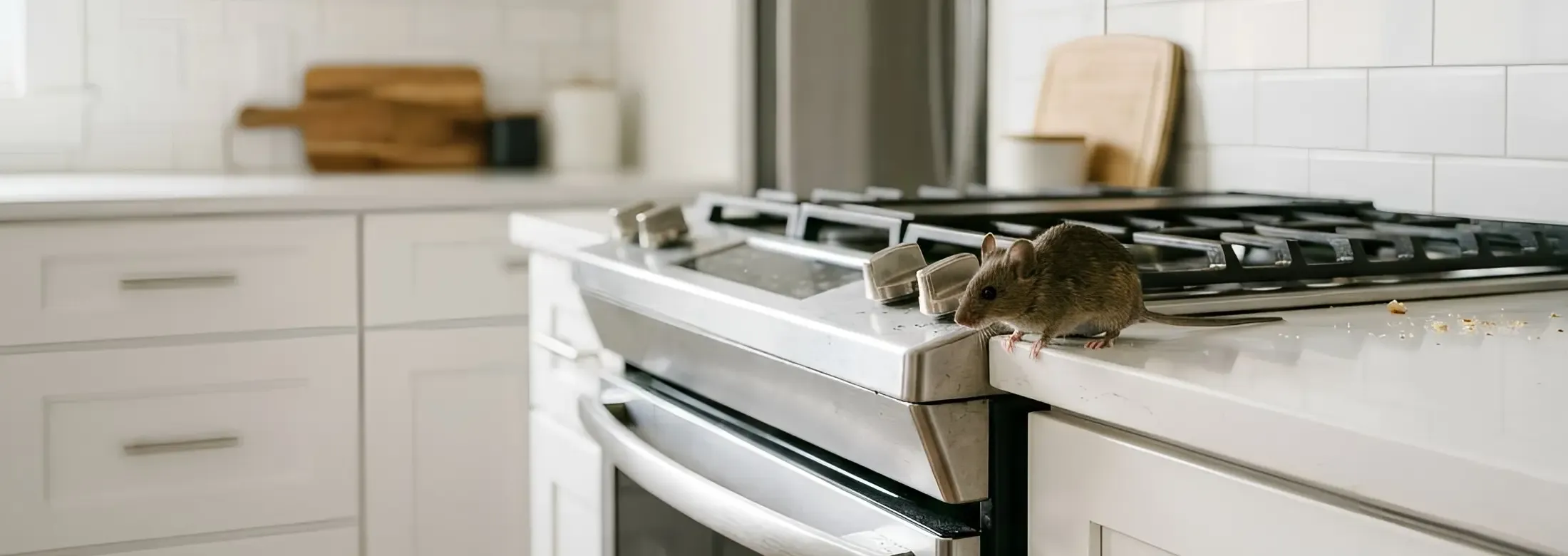
We focus on placing traps where rodents are most active to deliver efficient, consistent results. Combined with minor exclusion efforts, this approach helps keep populations from quickly returning.
Rodent Control in Greer, SC
Rodents have a way of turning a minor nuisance into a recurring problem fast. Mice and rats move into homes quietly, slipping through entry points in foundations, crawl spaces, siding gaps, and rooflines. Once they find a way in, they tend to come back, especially as temperatures drop in fall and early winter.
Store-bought traps and DIY methods can knock back the obvious signs, but they rarely address what is drawing rodents in or how they are getting inside. Without a real inspection and a structured plan, the activity tends to return. That is where professional rodent control makes a difference. A trained technician can assess behavior patterns, locate entry points, and put a treatment strategy in place that actually follows through.
Rodent pressure in this region is not a one-time fix. Seasonal shifts bring new activity each year, and older homes with aging foundations or crawl spaces are especially vulnerable. Recurring service visits help reduce that ongoing pressure over time, rather than just responding to each wave as it happens. Exclusion work, targeted trapping, and follow-up inspections work together to keep populations from reestablishing inside your home.
American Termapest takes a practical, inspection-first approach to rodent control. The goal is to understand what is happening at your specific property and build a plan around that, not apply a generic treatment and move on.
Rodent control services available in Greer:
- Rodent inspection and activity assessment
- Interior trapping
- Exterior trapping
- Entry point identification
- Exclusion services
- Crawl space and attic rodent assessment
- Recurring rodent control visits
- Seasonal rodent prevention service
Additional Services in Greer
Getting the Process Right Matters More Than You Think
When you're dealing with Rodent Control in Greer, a clear plan makes all the difference. From the first inspection to the final treatment, every step should address the specific conditions of your property so issues get resolved thoroughly rather than temporarily.
Here's how the process works:
- A thorough on-site inspection identifies active problems, entry points, and contributing conditions.
- A tailored treatment plan is developed based on what's actually found, not a one-size approach.
- Targeted treatments are applied using methods appropriate to the scope and severity of the situation.
- A follow-up evaluation confirms the treatment performed as expected and addresses any remaining concerns.
Why American Termapest, Inc. Stands Out for This Work
American Termapest brings focused expertise, transparent communication, and a commitment to results that holds up after the job is done. Every visit is handled with the same level of attention, whether it's a straightforward service call or a more involved situation that requires ongoing monitoring.
Rodent Control Technicians Who Know What They're Doing
Trapping and excluding rodents like rats, mice, and squirrels takes more than basic pest knowledge. Our technicians are trained well beyond what state licensing requires, so they understand rodent behavior, entry point identification, and how to build a treatment plan that actually fits your situation.
That level of preparation matters when you're dealing with wildlife that adapts quickly and exploits the smallest gaps in a structure. You get specialists who know how to think ahead, not just react.
Rodent Exclusion Services That Help Prevent Re-Infestation
Rodents get into homes the same way every time. They find a gap, a crack, or a soft spot in your foundation, roofline, or crawl space and work their way in. Mice can squeeze through an opening the size of a dime. Rats need only a quarter-sized gap. In Greer, older homes with aging wood framing, deteriorating crawl space vents, and settling foundations give rodents plenty of opportunities to get inside, especially as temperatures drop in fall and winter.
Rodent exclusion addresses that directly. American Termapest inspects your home for active entry points and structural vulnerabilities, including gaps around pipe penetrations, damaged vent screens, deteriorated door sweeps, and openings where utility lines enter the building. Those points are sealed using durable materials suited to the specific gap, including galvanized hardware cloth, copper mesh, and caulking compounds that rodents cannot chew through. The goal is to physically block access so that rodents cannot return after treatment, and to prevent new activity from starting in the first place. There are common questions homeowners have about how this process works and what to expect, and those are worth knowing before scheduling service.
Common Signs of Rodent Activity in Your Home
Mice, rats, and squirrels do not always make themselves obvious right away. By the time most homeowners notice something is wrong, these animals have often been present for a while, moving through wall voids, attics, and crawl spaces without much detection.
Knowing what to look for early makes a real difference, especially in older homes where entry points are easier to come by.
Common signs of rodent activity that South Carolina homeowners report include:
- Droppings along baseboards, in cabinets, near food storage areas, or in the attic
- Gnaw marks on wood trim, insulation, wiring, or stored items
- Scratching or scurrying sounds inside walls or the ceiling, especially at night
- Nesting material such as shredded insulation, paper, or fabric tucked into corners or hidden spaces
- Greasy rub marks along walls or baseboards where rodents travel repeatedly
- Chewed entry points around utility penetrations, foundation gaps, or damaged soffits and fascia boards
If you are noticing any of these signs, the activity is likely more widespread than what is visible. American Termapest can assess the extent of the problem and identify where animals are getting in, which is often the most important step in getting it under control.