

We locate active nests and apply targeted treatments to reduce activity and limit the risk of repeat nesting around your home.
Stinging Control in Greenville, SC
Stinging insects are not subtle. If carpenter bees are boring into your eaves, or wasps have claimed a corner of your yard, it stops feeling like your space pretty fast. In Greenville, the warm summers and older wood structures give these pests plenty of opportunity, and they take it.
The good news is that the right treatment, applied correctly and timed well, gets them under control. American Termapest has been doing exactly that for 71 years, serving homeowners in Greenville with targeted treatments for carpenter bees, wasps, yellowjackets, and hornets. We locate the nest or the entry point, treat it directly, and follow through to make sure the problem is actually resolved.
Here is why homeowners in Greenville keep calling American Termapest:
- Local, independent company, not a national franchise
- Honest pricing with no pressure tactics
- Targeted treatments for carpenter bees, wasps, yellowjackets, and hornets
- Technicians who know Upstate South Carolina pest behavior
- Residential and commercial service available
- We stand behind the work we do
If stinging insects are making it hard to use your own yard or property, give us a call. We will take a look, give you a straight answer, and get it handled.
Additional Services in Greenville
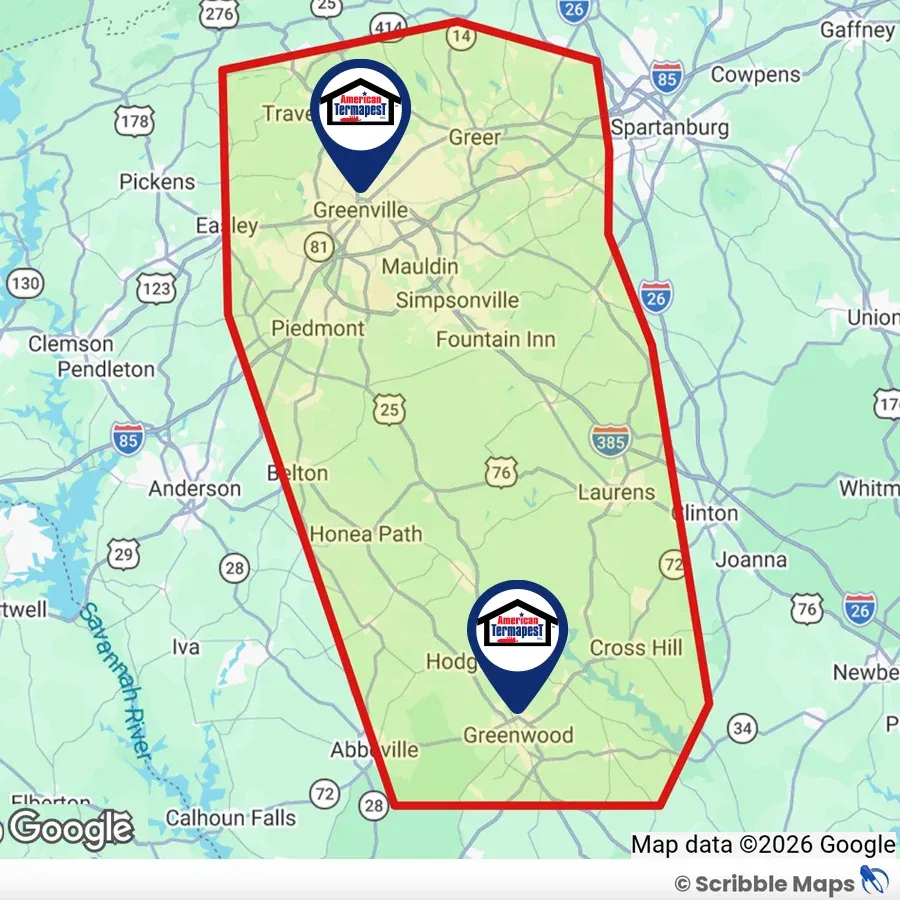
Stinging Insect Control for Your Property
Carpenter bees boring into your eaves, a wasp nest tucked under your deck, or yellowjackets that have taken over a corner of your yard — these are not situations that get better on their own. Stinging insects are at their most aggressive in summer and into early fall, and nests grow fast once they get established. Waiting only gives them more time to dig in.
Homeowners in Greenville deal with active nests and structural damage from stinging insects throughout the warmer months, and American Termapest handles all of it directly.
- Treatment covers carpenter bees, wasps, yellowjackets, and hornets — the stinging insects most likely to nest on or near your home
- Carpenter bee treatments address both the adults and the tunnels they bore into wood siding, fascia, and decking, helping prevent the damage from spreading
- Wasp and yellowjacket nests are treated at the source, whether that is under eaves, in wall voids, or in ground burrows
- Hornet nests, which can grow large and become a serious concern by late summer, are handled with the right products for the situation
- Honey bee removal is not a service we offer — those calls are referred to local beekeepers who handle live removal properly
If stinging insects have made part of your property difficult to use, that is worth fixing before the problem grows. Contact American Termapest to schedule a visit and get the right treatment in place.
71 Years of Knowing Exactly What to Do
When you have 71 years of fieldwork behind you, you stop guessing and start solving. That kind of experience means we know how to identify the problem fast and get it right the first time, whether it's a seasonal surge or something that's been quietly building for months.
American Termapest has spent decades building a reputation on reliable, proven service, and that commitment is what keeps homeowners calling us back year after year.
Stinging Insect Control in Greenville
If you have ever spotted a nest tucked under your eave, inside a wall void, or hanging from a tree near your back door, you already know how fast a stinging insect problem can escalate. In Greenville, carpenter bees, wasps, yellowjackets, and hornets are a real seasonal concern, and they tend to become most aggressive in late summer and early fall.
According to the American Academy of Allergy, Asthma and Immunology, roughly 5 percent of Americans experience severe allergic reactions to insect stings at some point in their lives. For a household with children or pets spending time outdoors, an active nest nearby is not something to put off.
What American Termapest Targets in South Carolina
The stinging insects we treat include species commonly found throughout the state:
- Carpenter bees, which bore into wood and cause structural damage over time
- Paper wasps, which build open-comb nests near eaves and door frames
- Yellowjackets, which often nest in the ground or inside wall voids
- Hornets, including the bald-faced hornet, which build large aerial nests
One thing worth knowing is that honey bees are not part of what we treat. If you have a honey bee colony, we refer those calls to a local beekeeper who can relocate them safely.
Why Local Knowledge Matters Here
Stinging insect behavior shifts with the season, and what works in early summer is not always the right call in September when colonies are larger and more defensive. Treating a yellowjacket nest in a wall void is a different situation than knocking down a paper wasp nest near a porch light. Getting the identification right and understanding where nests are likely to be hidden is a big part of doing this work effectively.
If you have questions about what you are seeing around your property or want to know more about how treatment works, there is more information below.