

We locate active nests and apply targeted treatments to reduce activity and limit the risk of repeat nesting around your home.
Stinging Control in Welcome, SC
If stinging insects have taken over parts of your property, you are not alone. Carpenter bees, wasps, yellowjackets, and hornets are aggressive defenders of their nests, and in the Upstate South Carolina heat, they are active for a long stretch of the year. The longer a nest gets established, the harder it gets to manage on your own.
American Termapest has been handling stinging insect problems in Welcome for 71 years. We locate nests, treat them with the right products for the species and situation, and help prevent them from coming back. It is straightforward, effective, and backed by real local experience.
Here is why homeowners in Welcome keep coming back to us for stinging insect control:
- Experienced with carpenter bees, wasps, yellowjackets, and hornets
- Locally owned, not a national franchise
- Honest pricing without upselling
- Species-specific treatment approach
- Residential and commercial service available
- Familiar with Upstate SC pest pressure and seasonality
Stinging insects are not a wait-and-see kind of problem. If you are dealing with nests on your property, getting them handled now makes the rest of the season a lot more manageable.
Additional Services in Welcome
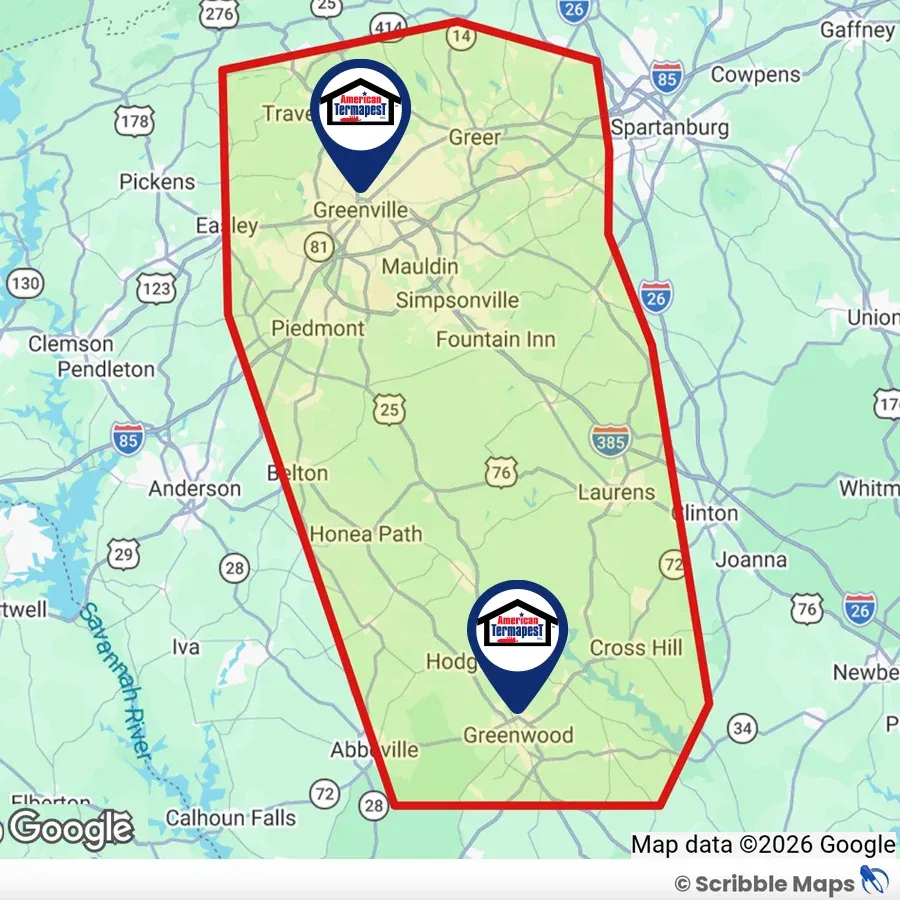
Stinging Insect Control for Carpenter Bees, Wasps, and Hornets
When stinging insects start building on or around your home, the problem tends to escalate fast. Carpenter bees bore into wood trim, fascia, and decking. Wasps and yellowjackets build nests under eaves, in wall voids, and in the ground. Hornets are aggressive when disturbed and can be dangerous near high-traffic areas of your property. These are not pests you want to leave until next season.
Homeowners in Welcome deal with peak stinging insect pressure from late spring through early fall, and the activity around structures can get serious quickly.
- Targeted treatment for carpenter bees, paper wasps, yellowjackets, and hornets on and around your home
- Nest location and removal handled directly, not just surface spraying around the problem
- Carpenter bee treatment addresses both active bees and the entry holes they leave behind in wood
- Inspection covers eaves, soffits, decking, window frames, and other common nesting sites specific to your structure
- American Termapest is a locally operated company, not a national chain, so the person treating your property knows this region and its pest patterns
Stinging insect problems are worth addressing before someone gets stung. Contact us to schedule service and get the nests handled the right way.
71 Years of Keeping Homes Protected
With 71 years of fieldwork behind us, we've seen every pest problem imaginable and know exactly how to handle even the most stubborn infestations fast.
That kind of proven experience means we identify the issue quickly, get it right the first time, and deliver results built on decades of reliable service to the community.
Stinging Insect Control in Welcome
If you have noticed wasps building nests under your eaves, yellowjackets coming out of a ground hole in the yard, or carpenter bees boring into your wood trim, you are not dealing with a minor nuisance. Stinging insects become more aggressive as summer moves into fall, and nests that go untreated tend to grow larger and harder to handle.
According to the American College of Allergy, Asthma and Immunology, roughly 5 percent of Americans experience severe allergic reactions to insect stings, making professional removal a serious health consideration for many households. Even without an allergy, an active hornet or yellowjacket nest near a doorway or outdoor living space is a real problem every time someone walks past it.
Common Stinging Insects Treated in Welcome
American Termapest treats the stinging insect species that homeowners in South Carolina encounter most often:
- Paper wasps nesting under eaves, door frames, and deck railings
- Yellowjackets nesting in the ground or inside wall voids
- Bald-faced hornets and aerial hornets building large paper nests in trees or on structures
- Carpenter bees tunneling into fascia boards, wood trim, and deck wood
Honey bee removal is not a service offered here. Honey bee colonies are referred to local beekeepers who can safely rehome them.
Why Carpenter Bees Are a Separate Concern
Carpenter bees look similar to bumblebees, but unlike bumble bees, they bore clean circular holes into unfinished or weathered wood to create nesting tunnels. Over time, that structural damage adds up, especially on older homes where the wood is already vulnerable. Treating carpenter bees means addressing both the active bees and protecting the wood from repeat damage.
If you have questions about what to expect from treatment, the best timing for your situation, or what makes one nest more serious than another, there is more helpful information below.