

We handle nuisance wildlife with proven methods that prioritize both effectiveness and proper handling, from initial inspection through follow-up.
Wildlife Removal in Wade Hampton, SC
Wildlife in Upstate South Carolina is not shy, and if you own property near wooded stretches or older neighborhoods in Wade Hampton, you already know that. Raccoons, skunks, and opossums do not wait for an invitation. They find a gap, a loose vent, or a soft spot in your crawl space and move in on their own schedule.
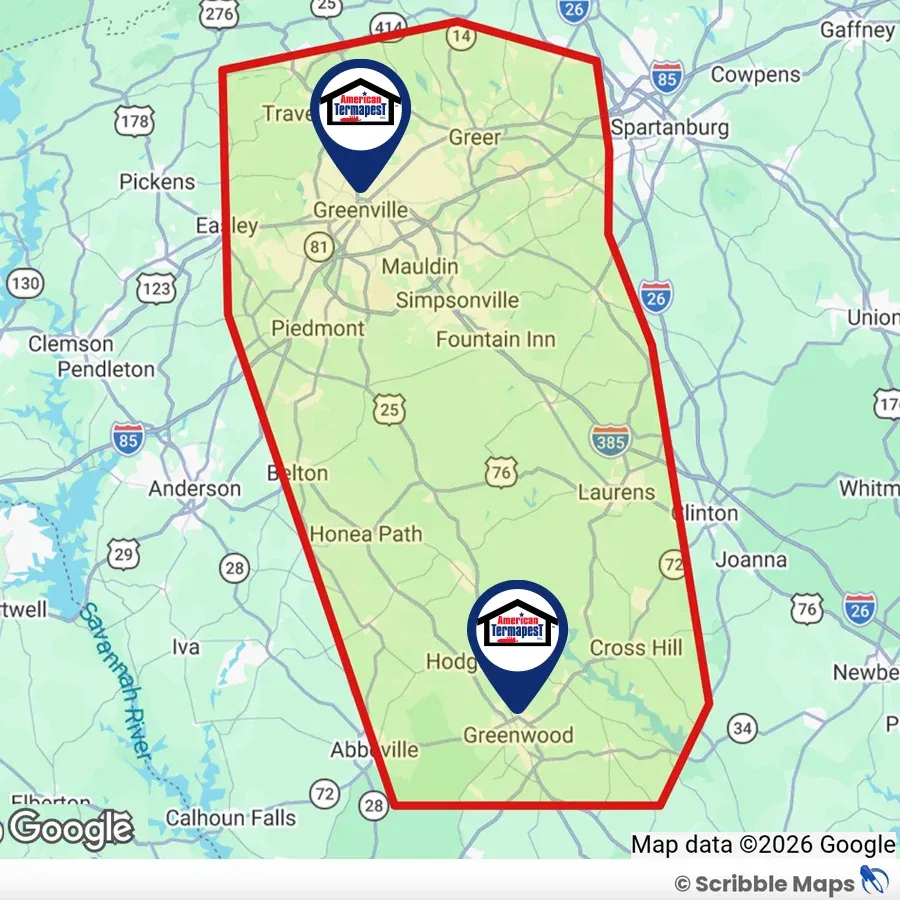
American Termapest handles wildlife trapping and removal for homeowners and property managers throughout Wade Hampton. Every removal is done humanely, with methods that do as little harm as possible to the animal while getting it off your property fast. We also offer exclusion work to help close off the entry points these animals use, so the same problem does not keep coming back season after season.
Here is what we remove in Wade Hampton:
- Raccoons
- Opossums
- Armadillos
- And Skunks
If you have noticed digging in your yard, damage under your home, or noises you cannot explain, it is worth getting someone out to take a look. The sooner it gets handled, the less damage you end up dealing with later.
Additional Services in Wade Hampton
When Wildlife Gets Into Your Home You Need Someone Who Knows How to Handle It
Raccoons tearing through a soffit, an armadillo tunneling under your foundation, a skunk taking up residence beneath your deck — these are not problems you want to sit on. Wade Hampton homeowners dealing with Wildlife face real structural and health risks, and the longer wildlife stays, the more damage it does. Trapping and exclusion work best when the approach is methodical, not reactive.
Here is how the process works when you call American Termapest:
- An inspection of your property identifies active wildlife, entry points, and damage to structures, crawl spaces, or exterior materials.
- Targeted traps are placed based on the species involved, whether that is a raccoon in the attic, an opossum under a porch, a skunk near the foundation, or an armadillo rooting through the yard.
- Trapped animals are removed humanely and relocated in accordance with South Carolina wildlife regulations.
- Where applicable, exclusion measures are applied to close off entry points and reduce the likelihood of re-entry.
- A follow-up assessment confirms that the problem has been resolved and that no additional animals have moved in.
Why American Termapest Is the Right Call for Wildlife Problems in Your Area
American Termapest is a locally owned, independent company, not a national franchise with a call center. When wildlife is getting into your home, you want someone who understands the terrain, the species common to this part of the Carolinas, and how to get the job done thoroughly. The work is handled directly and professionally, with honest communication about what the inspection found and what it will take to resolve it.
Your Neighbors in Wildlife Control
Our team at American Termapest lives and works right here in Wade Hampton, and that means we're involved in the same community events, organizations, and neighborhoods you are.
We know the local wildlife patterns, the seasonal behaviors that catch homeowners off guard, and how quickly a raccoon, skunk, or armadillo problem can escalate if it goes unaddressed. That local knowledge lets us respond fast and get it right.
Wildlife Exclusion That Keeps Animals From Coming Back
Once a raccoon, opossum, skunk, or armadillo finds a way into your home, it will use that same entry point again. Wildlife control is not just about removing the animal. It is about making sure the problem does not repeat itself.
That is where wildlife exclusion comes in. After we remove the animal, we locate and seal the openings they used to get inside. This includes gaps in soffits, damaged vents, deteriorating fascia boards, and openings around crawl space foundations. In Wade Hampton, older home construction often means more of these vulnerabilities exist, and animals that spend time near wooded areas or foothills learn to take advantage of them.
Stopping Re-Entry Is the Part That Actually Protects Your Home
Exclusion work uses physical barriers, hardware cloth, vent covers, and sealed penetrations to close off the access points animals rely on. The materials are durable and installed with the specific entry behavior of each animal in mind. A raccoon pushing through a damaged vent and a skunk digging under a foundation both require different approaches.
American Termapest takes a straightforward approach. We assess your home, identify where animals have been entering or could enter, and apply exclusion methods that hold up over time. The result is a structure that is far less accessible to the wildlife that tends to cause the most damage to attics, crawl spaces, and insulation.
Warning Signs That Wildlife Has Moved Into Your Wade Hampton Home
Raccoons, opossums, armadillos, and skunks are common across South Carolina, and they are not shy about moving in close to homes. The trouble is that most homeowners do not realize there is an animal problem until it has already settled in and done real damage.
These animals are most active at night, which means the signs tend to show up before you ever see the animal itself. Knowing what to look for early can save you from a much bigger headache later.
Common signs of wildlife activity around South Carolina homes include:
- Scratching, thumping, or shuffling sounds coming from the attic or crawl space, especially after dark
- Strong musky or foul odors near the foundation, vents, or under the porch
- Cone-shaped holes or disturbed soil in the yard, often a sign of armadillo rooting activity
- Overturned trash cans, scattered debris, or tampered compost bins
- Visible entry points such as torn soffit material, displaced crawl space vents, or gaps near the roofline
- Droppings along fence lines, near the foundation, or in sheltered areas under decks and outbuildings
- Pet food disappearing overnight when bowls are left outside
One animal moving in often attracts others, and the longer they stay, the more damage accumulates. If any of these signs look familiar, American Termapest can assess what is happening and determine the scope of the problem before it goes further.